No Pressure, No Guilt—Just a Smart Way to Move Again
It usually doesn’t happen all at once.
You don’t wake up one day and decide, “I’m quitting fitness forever.” Life just slowly nudges workouts out of the way. A busy job. An injury. A family obligation. A bad winter. One skipped workout turns into two, then a month, then suddenly your gym shoes are collecting dust like antiques.
And now you’re here, wondering how to start exercising again after a long break—without feeling embarrassed, overwhelmed, or like your lungs might file a formal complaint. Getting back into exercise shouldn’t feel like punishment. It should feel like coming home to your body again.
You’re Not Broken — You’re Just Rusty
One of the biggest lies we tell ourselves when restarting fitness is that “we have lost everything.” Strength. Endurance. Discipline. Confidence.
You haven’t.
Your body is more like an old car that’s been sitting in the garage. It doesn’t need a full rebuild. It needs the engine warmed up.
Muscles remember patterns. Joints remember movement. Your brain remembers how it feels to finish a workout and think, “Okay… that wasn’t terrible.”
Why Going Hard Is Usually What Makes You Quit Again
Motivation feels powerful at the beginning. It whispers things like:
“Let’s train like we used to.”
“No pain, no gain.”
“Make up for lost time.”
That voice is not your friend.
Going too hard too soon leads to brutal soreness, frustration, and that familiar thought:
“I knew I wouldn’t stick with this.”
Restarting exercise isn’t about intensity. It’s about trust. You’re rebuilding trust with your body, your schedule, and your mindset.
The Gentle Restart Nobody Talks About (But Everyone Needs)
Instead of asking how hard you should exercise, try asking something better:
“What’s the easiest workout I could do today and still feel proud of myself?”
That question changes everything.
Sometimes the answer is a walk around the block. Sometimes it’s ten minutes of stretching. Sometimes it’s just putting on workout clothes and showing up.
And yes—those still count.
Movement That Doesn’t Feel Like Punishment
If exercise feels miserable, your brain will fight it every time. So forget what you think you should do and focus on what you’ll actually repeat.
Walking is a perfect place to start. It improves cardiovascular health, reduces joint stiffness, lowers stress, and doesn’t require special equipment or a hype playlist.
Other low-pressure options:
Light strength training at home
Resistance bands
Cycling or stationary bike
Swimming or pool workouts
Short bodyweight routines
The goal isn’t to sweat buckets. It’s to move enough that tomorrow doesn’t feel harder than today.
About That Soreness You’re Worried About
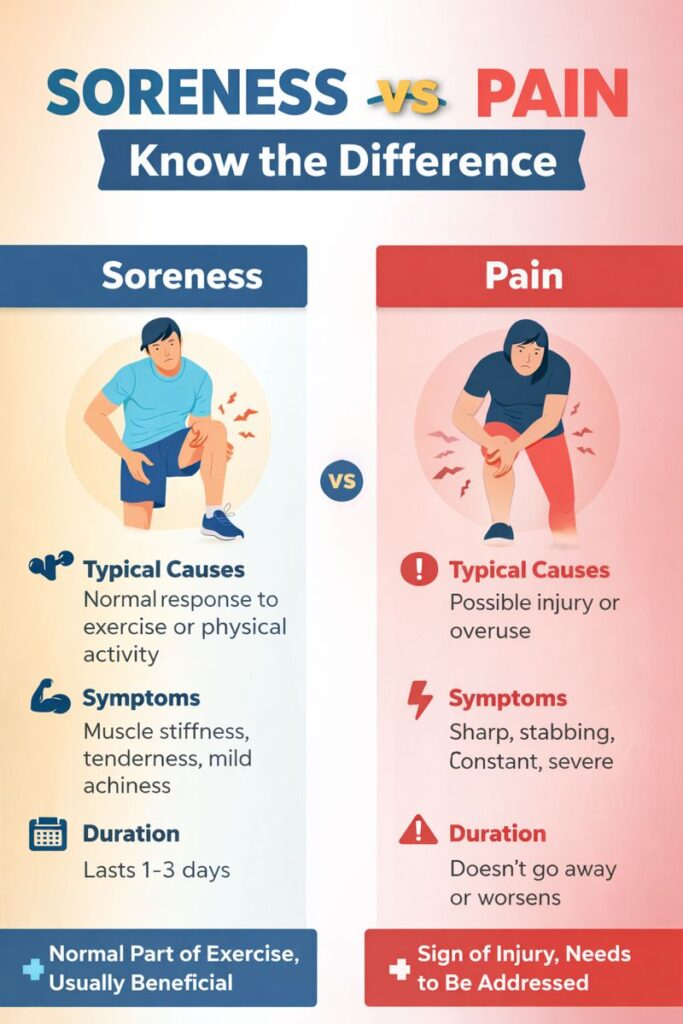
Some stiffness after restarting exercise is normal. Your muscles are waking up.
What you want to avoid is pain that feels sharp, stabbing, or persistent.
A good rule of thumb:
If movement makes it feel better, you’re probably okay. If movement makes it worse, it’s time to stop.
Recovery days aren’t a sign of weakness—they’re part of the process.
A Week That Actually Feels Doable
You don’t need a perfect plan. You need a realistic one.
Think of your week like a conversation with your body, not a contract you’re afraid to break.
A few short strength sessions. A couple of walks. Some stretching when things feel tight. That’s enough to build momentum.
If you finish a workout feeling like you could have done more, you did it right.
Leave the Old Version of You at the Door
This is the quiet part nobody likes to admit.
You might remember being stronger. Faster. Leaner.
Chasing that version of yourself usually leads to frustration. You’re not competing with your past—you’re supporting your present.
Showing up consistently beats proving a point.
Progress That Has Nothing to Do With the Scale
When restarting a workout routine, the scale can be misleading. Muscles retain water. Weight fluctuates. Confidence drops for no good reason.
Better signs you’re on the right track:
You sleep better
You feel less stiff in the morning
Your mood improves
Daily tasks feel easier
Your energy lasts longer
Those changes often show up before anything visible does.
Make It Enjoyable (Or At Least Tolerable)
Exercise doesn’t have to be serious to be effective.
Listen to music you love. Walk while catching up on podcasts. Do short workouts that fit your attention span. Mark workouts on a calendar just for the satisfaction of checking the box.
If it feels like a chore, simplify it.
The Truth About Getting “Back in Shape”
Most people notice:
Better energy within a couple of weeks
Strength returning within a month
Visible changes within two months
That timeline only works if you don’t burn yourself out trying to rush it.
Start Where You Are — That’s the Whole Secret
Starting exercise again after a long break isn’t about motivation or discipline.
It’s about making today’s effort small enough that tomorrow doesn’t feel intimidating.
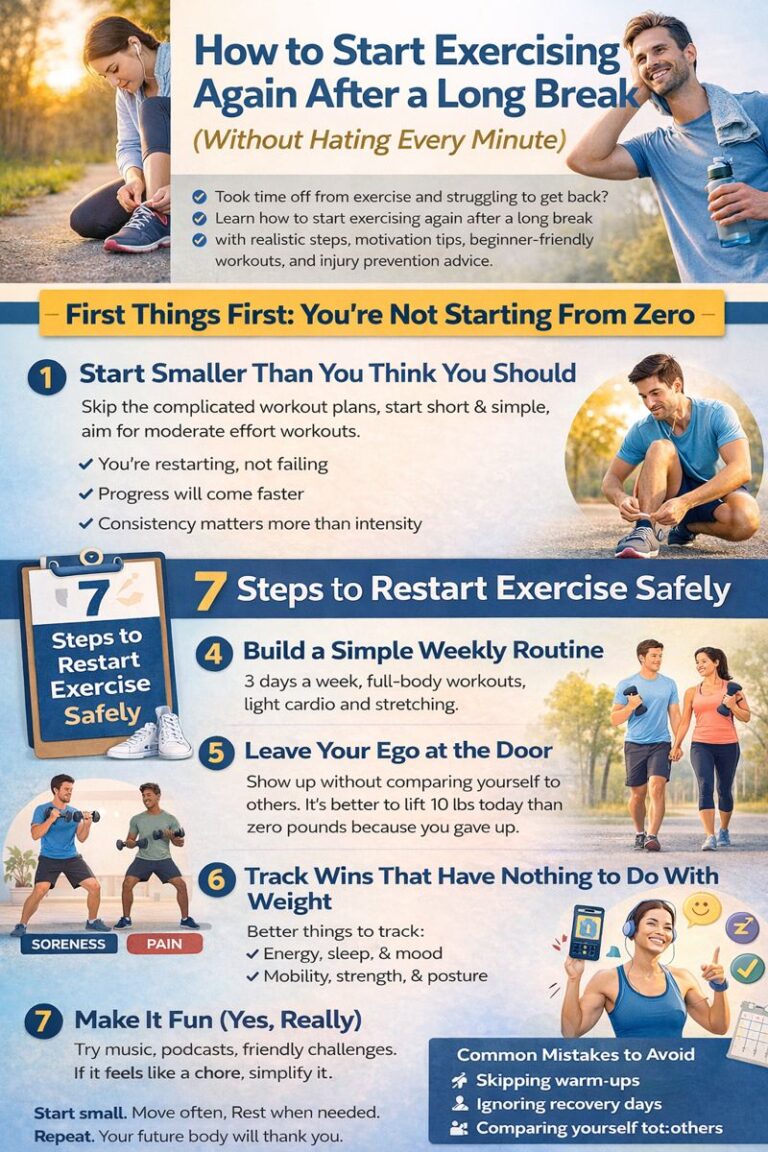
Move a little. Rest when needed. Repeat.
That’s how fitness becomes part of your life again—without hating every minute.
Protein Powders can help if youre lacking energy
Trying to choose the right protein powder? The best option depends on your goals.
Whey protein is great for building muscle and post-workout recovery because it absorbs quickly. Casein protein digests slower, making it a good choice before bed to help keep you full and support muscle recovery overnight. Plant-based protein powders are perfect for anyone avoiding dairy or looking for a vegan-friendly option.
Popular choices include Optimum Nutrition Gold Standard Whey, Dymatize ISO100, and Orgain Plant-Based Protein. Each has different benefits depending on whether you want faster digestion, better taste, more protein, or dairy-free ingredients.
If you need help finding the best protein powder for your goals, check out this guide:
https://shopalmostanything.com/top-5-comparison-of-popular-protein-powders/