

Medical Breakthroughs Changing Healthcare
Healthcare is changing faster than at any point in history. What once required invasive tests, long hospital stays, or years of trial-and-error treatment can now be done with a blood sample, a wearable device, or an algorithm analyzing data in seconds.
Today’s medical news and innovations aren’t just exciting headlines — they’re improving survival rates, reducing side effects, and giving patients more control over their health than ever before.
This article breaks down the most important healthcare innovations shaping modern medicine, what they mean for real people, and why staying informed matters.
The shift toward smarter, more personalized healthcare
Traditional healthcare has often been reactive — treating illness after symptoms appear. Modern healthcare innovation focuses on early detection, prevention, and personalization.
Key Drivers of Modern Healthcare Innovation
Artificial intelligence in medicine
Personalized and precision medicine
Digital health tools and remote monitoring
Breakthroughs in medical research
According to the National Institutes of Health (NIH), personalized and data-driven healthcare approaches are already improving patient outcomes across multiple disease categories
(https://www.nih.gov/health-information).
Artificial intelligence (AI) in medicine
How AI is improving diagnosis and decision-making
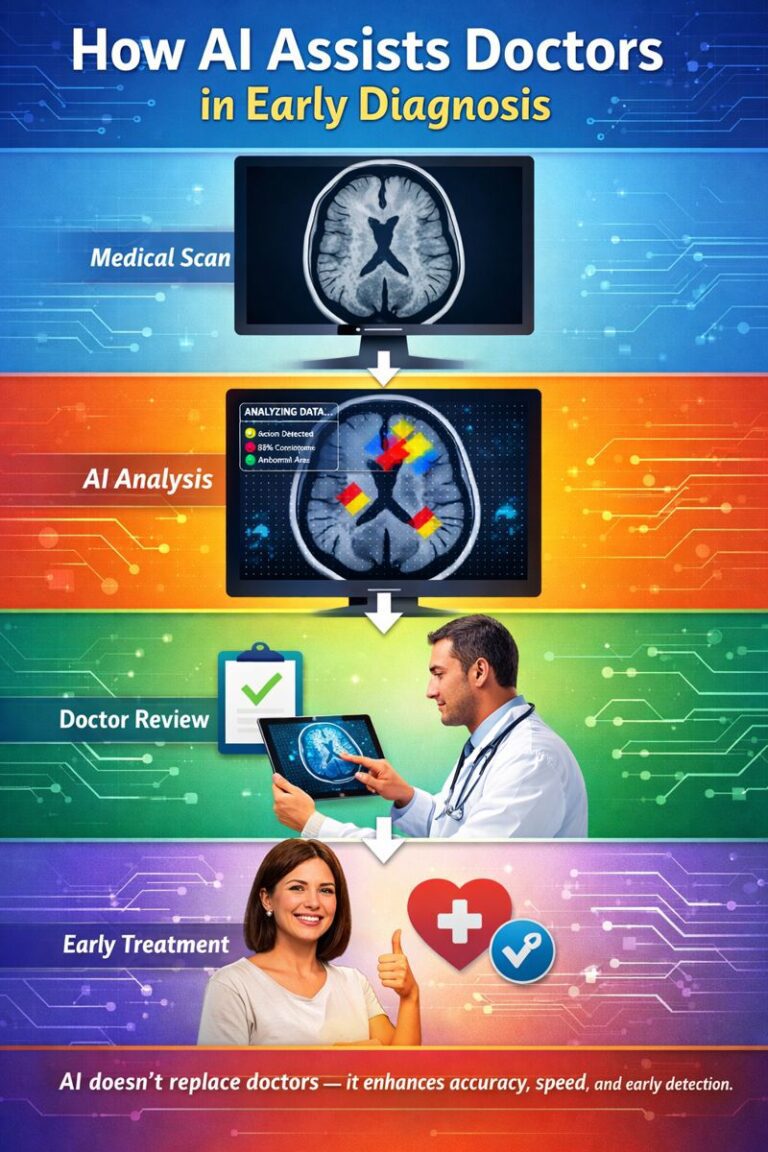
Artificial intelligence is one of the most impactful medical innovations in recent years. AI systems can analyze medical images, lab results, and patient records faster and, in some cases, more accurately than traditional methods.
Where AI Is Used Today
AI is now widely used in:
Radiology to detect tumors, fractures, and internal bleeding
Cardiology to identify abnormal heart rhythms
Dermatology to screen skin lesions for cancer risk
Research published through PubMed shows that AI-assisted imaging can improve early disease detection, especially for cancer and cardiovascular conditions
(https://pubmed.ncbi.nlm.nih.gov).
Early Diagnosis Made Easier with AI
Precision medicine: treating the individual, not the average
What personalized medicine really means
Precision medicine tailors healthcare based on an individual’s genetics, environment, and lifestyle. Instead of prescribing the same medication to everyone, doctors can predict which treatment will work best for each patient.
FDA – Precision Medicine (overview on diagnostics & tailored treatments)
https://www.fda.gov/medical-devices/in-vitro-diagnostics/precision-medicine
Benefits of personalized healthcare:
Fewer side effects
Higher success rates
Reduced trial-and-error prescribing
Better long-term outcomes
This approach is already transforming cancer care, autoimmune disease treatment, and rare genetic disorders.
Cancer treatment breakthroughs changing survival rates
Immunotherapy leads the way
Immunotherapy has become one of the most important cancer treatment innovations. Instead of attacking both healthy and cancerous cells, it trains the immune system to recognize and destroy cancer cells.
Examples of Immunotherapy Advances
CAR-T cell therapy
Cancer vaccines
Combination immunotherapy approaches
The National Cancer Institute (NCI) reports significant survival improvements in several advanced cancers due to immunotherapy
https://www.cancer.gov.
Liquid biopsies: earlier, less invasive cancer detection
Liquid biopsies use blood samples to detect cancer-related DNA fragments. This innovation allows doctors to:
Detect cancer earlier
Monitor treatment effectiveness
Identify recurrence before symptoms appear
According to NIH-supported studies, liquid biopsies may significantly improve early cancer detection rates
https://www.nih.gov.
Traditional Biopsy vs Liquid Biopsy Detection Timeline
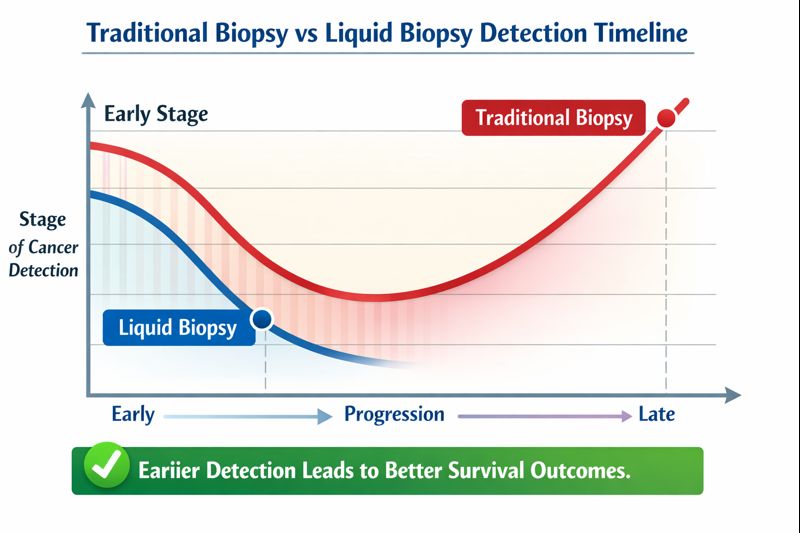
X-Axis: Time
Y-Axis: Stage of cancer detection
Traditional biopsy → later-stage detection
Liquid biopsy → earlier-stage detection
Earlier detection leads to better survival outcomes.
Wearable health technology and remote monitoring
From fitness trackers to medical tools
Wearable health technology has evolved beyond step counting. Devices now monitor vital health data in real time, helping doctors detect problems earlier.
What Wearables Can Track
Heart rate and rhythm
Blood oxygen levels
Sleep quality
Physical activity trends
The Centers for Disease Control and Prevention (CDC) recognizes wearable technology as a growing tool in preventive healthcare
https://www.cdc.gov.
Telehealth and digital health expansion
Healthcare without walls
Telehealth improves access for people who:
Live in rural or underserved areas
Have mobility challenges
Prefer flexible care options
Digital health tools also include:
Online therapy platforms
Chronic disease management apps
Remote patient monitoring systems
The World Health Organization (WHO) supports digital health as a way to expand access and reduce healthcare inequalities
https://www.who.int/health-topics/digital-health.
Mental health innovations
Expanding access and treatment options
Mental health care is undergoing major innovation. Teletherapy, mental health apps, and digital cognitive behavioral therapy (CBT) are helping millions access care.
Examples of Digital Health Tools
Ketamine-assisted therapy
Neuromodulation techniques
Personalized psychiatric treatment plans
The National Institute of Mental Health (NIMH) highlights these advances as promising options for treatment-resistant conditions
https://www.nimh.nih.gov.
Gene therapy and regenerative medicine
Treating disease at its source
Gene therapy works by correcting faulty genes responsible for disease. Recent FDA-approved therapies have shown success in treating:
Inherited blood disorders
Rare genetic diseases
Certain types of blindness
Regenerative medicine, including stem cell therapy, focuses on repairing damaged tissues and organs.
According to the NIH, regenerative medicine may reduce the need for invasive surgeries in the future
https://www.nih.gov.
Ethical challenges and accessibility concerns
While medical innovation brings powerful benefits, it also raises important questions:
Who has access to advanced treatments?
How is patient data protected?
Can AI be used ethically and transparently?
The FDA and WHO emphasize the importance of responsible innovation to ensure safety, privacy, and fairness.
What these medical innovations mean for everyday people
For patients, healthcare innovation means:
Faster diagnoses
More personalized treatments
Fewer invasive procedures
Better preventive care
Medical technology is making healthcare more proactive, efficient, and patient-centered.
In Summary:
Medical news and innovations are no longer distant concepts — they are actively reshaping how healthcare is delivered today. From AI-driven diagnostics to personalized medicine and digital health tools, the future of healthcare is smarter, more precise, and more human-focused.
Staying informed empowers patients to ask better questions, make better decisions, and take control of their long-term health.

